
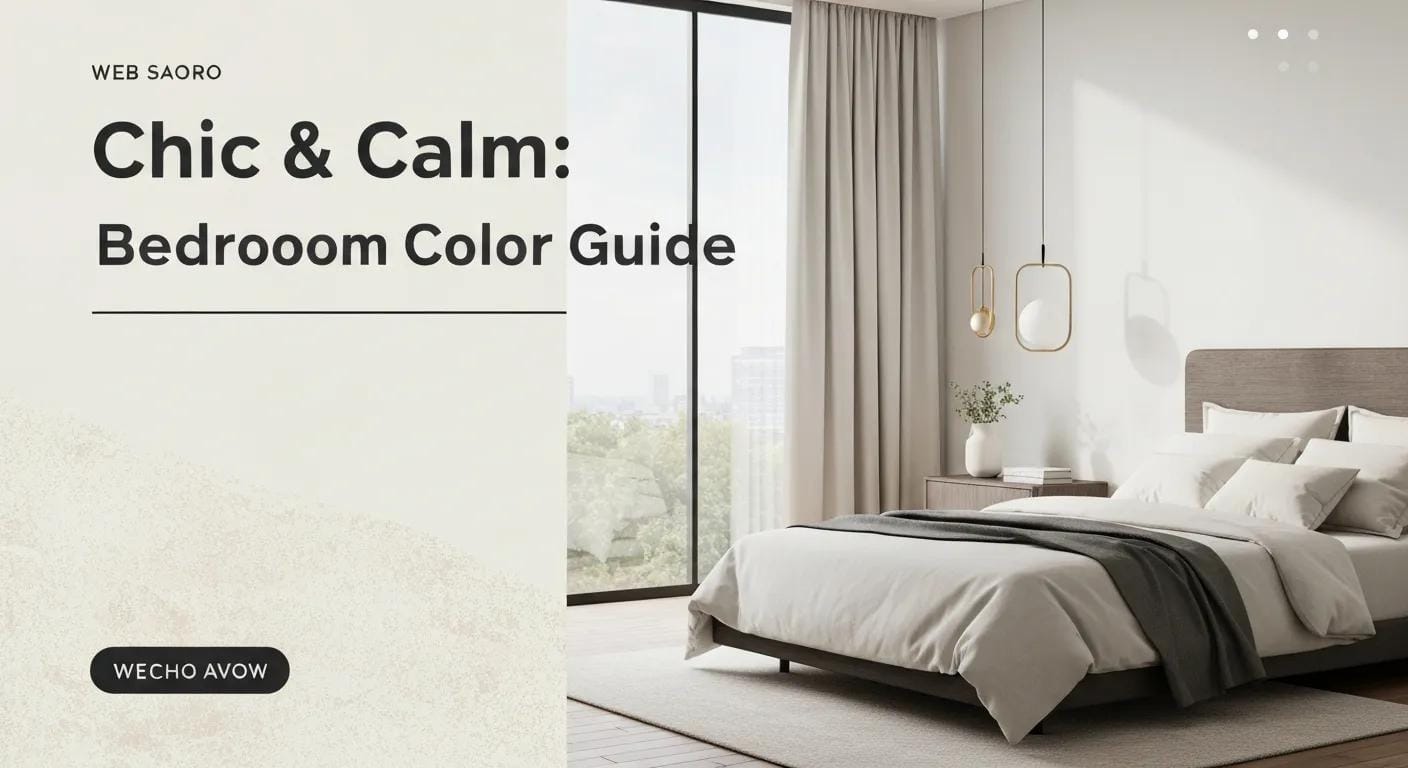
Chic & Calm: Bedroom Color Guide
Choosing the best bedroom paint color starts with understanding how color, light, and finish interact to shape mood and perceived space. This guide explains why certain hues promote sleep and relaxation, how room size and natural light change color perception, and which 2025 trends balance restful atmosphere with modern style. Many homeowners struggle to translate inspiration images into a calming, livable palette; here you’ll find a step-by-step workflow—choose color, test in your light, pick finish, then decide DIY or hire a pro—that simplifies the decision. The article covers top calming color families, size-and-light rules, trend palettes with hex/brand matches, color-psychology tables for quick reference, Delaware-specific factors and where to source help locally, plus practical DIY and contractor-selection checklists. Read on for actionable rules, sample swatches, and test-driven tips to pick a bedroom color that supports better sleep and lasting style.
What Are the Most Calming Bedroom Colors for Better Sleep?
Calming bedroom colors are muted hues with low saturation that reduce visual stimulation and promote physiological relaxation by lowering arousal and heart rate. These colors work because cool or warm-soft tones reflect less intense light and cue the nervous system toward rest, producing a tangible sleep-supporting effect. Using these shades consistently across walls, trim, and textiles creates a cohesive, low-contrast environment that soothes before sleep. Below are the most reliable color families backed by design practice and recent trend analysis for bedrooms in 2025.
This list highlights the top calming color families and why they work for sleep:
- Soft blues: pale to muted blues that mimic sky and water and lower sympathetic arousal.
- Muted greens: sage and gray-greens that evoke nature and support calm breathing.
- Warm neutrals: soft beiges and warm grays that create cozy, cocooning atmospheres.
- Dusty lavenders and mauves: gentle cool purples with a sedative visual effect.
These families offer immediate, practical starting points for a restful bedroom palette and lead into how specific shades and pairings perform in different room conditions.
Which Colors Promote Relaxation and Tranquility in Bedrooms?
Soft blues, muted greens, and warm neutrals promote relaxation by balancing color temperature and minimizing high-contrast stimulation. Soft blue evokes water and sky, reducing cognitive alertness, while sage and olive greens signal natural calm and aid breathing-focused relaxation techniques. Warm neutrals like beige and soft taupe provide thermal comfort and pair easily with wood tones and low-gloss finishes to avoid glare. When selecting a shade, test a 12×12″ swatch on the wall and observe it in morning and evening light to confirm the intended tranquil effect.
These choices pair well with bedding and lighting: cool whites and layered textiles create a serene palette, while bedside lamps with warm color temperatures maintain a consistent mood into the evening. The next section explains which colors and finishes can be counterproductive for sleep and how to mitigate them with design strategies.
What Bedroom Colors Should You Avoid for Restful Sleep?
Avoid high-chroma reds, bright oranges, neon shades, and intense saturated hues that increase physiological arousal and can delay sleep onset by stimulating attention and energy. High-gloss finishes and very bright whites reflect more light and can create an alerting environment that undermines relaxation. Instead of eliminating bold colors altogether, use them sparingly as accents—pillows, artwork, or a small feature wall—to preserve restful surroundings while retaining personality. If you love vivid color, choose deeper, desaturated tones or pair brights with large areas of calming neutrals to reduce overall visual stimulation.
When redesigning for sleep, prioritize low-VOC, matte or eggshell finishes that reduce reflection and chemical odors that might disrupt breathing or comfort; this approach preserves air quality and supports relaxation. These avoidance rules lead naturally into practical testing steps to validate color choices in your room’s unique light.
After exploring calming hues, consider where to source paint and comparable shades: major manufacturers like Benjamin Moore and Sherwin Williams publish curated “calming” or “bedroom” palettes and provide sample pots for testing, while color visualizers help preview tones in photographed rooms. For Delaware homeowners, local paint retailers and showrooms carry national-brand swatches and offer sample sizes for at-home testing; pairing brand samples with swatch testing helps reproduce a recommended shade reliably. Local painting services can also advise on finish selection and low-VOC options to match sleep-focused color plans.
How Do Room Size and Natural Light Affect Bedroom Paint Color Choices?
Room size and natural light alter perceived color by changing the amount and quality of reflected light; lighter colors expand space by reflecting more light, while darker tones create intimacy by absorbing light and defining volume. The mechanism is simple: color saturation and value interact with light level to influence perceived scale and mood, so choosing a paint depends on both room dimensions and window orientation. Selecting the right color improves comfort and perceived space, making small rooms feel larger or large rooms feel cozier as desired. The following practical rules link room characteristics to recommended color approaches.
Below is a compact guide matching room size and light to color choices to simplify selection.
| Room Condition | Recommended Color Types | Example Shades / Brand Matches |
|---|---|---|
| Small + Low Light | Very light, warm neutrals and soft off-whites | Warm beige, pale greige (try a soft warm gray) |
| Small + Ample Light | Cool light blues and pale greens to add airiness | Powder blue, muted sea glass |
| Large + South-facing | Deeper muted tones or layered neutrals for coziness | Warm taupe, deep sage |
| Large + North-facing | Warmer neutrals and light-reflective finishes to counter cool light | Creamy beige, soft warm gray |
This table helps match room attributes to practical paint directions and leads to tactical testing routines for accurate selection.
What Are the Best Paint Colors for Small Bedrooms to Create Spaciousness?
For small bedrooms, light-valued hues with low chroma—such as pale warm grays, soft ivories, and pastel blues—maximize perceived space by increasing diffuse reflection and reducing contrast with trim and ceilings. Using a single color family across ceiling, walls, and trim creates a continuous visual plane that tricks the eye into seeing a larger area; the addition of reflective fabrics and a satin or low-sheen finish can further enhance perceived depth. Cool-toned light blues and greens can also open a small room when balanced with warm accents in textiles to prevent a clinical feel. Test options by painting a 2-foot strip and viewing it at night under bedside lighting to verify the spaciousness effect.
These tactics work together to expand a small bedroom visually while maintaining a restful color story that supports sleep and comfort.
How Does Natural Light Influence the Perception of Bedroom Paint Colors?
Natural light direction shifts a color’s temperature: north-facing rooms receive cool, bluish light that can make cool paints look colder, while south-facing rooms get warm, bright light that warms colors and can make neutrals appear richer. East-facing windows emphasize morning warmth and can boost softer cool tones, while west-facing exposure intensifies evening warmth and may deepen colors late in the day. To account for these shifts, always test swatches at multiple times—morning, midday, and evening—observing how wall color reads beside bedding and flooring. Choosing slightly warmer tints in north-facing rooms and cooler, less saturated tones in south-facing rooms creates consistency across changing daylight conditions.
Testing in situ reduces surprises and prepares you to select the correct undertone for your room’s dominant light pattern.
What Are the Top Bedroom Paint Color Trends for 2025?
Bedroom color trends for 2025 emphasize tranquil, nature-linked palettes that blend soft neutrals, earth tones, and refined cools to support wellbeing and style. Trends center on textures and layered tones more than high-contrast statements, favoring matte or low-sheen finishes that reduce glare and emphasize textile layering. Designers are pairing muted blues and greens with warm, grounded beiges and clay accents to create balanced schemes that read as contemporary yet timeless. The table below maps trend categories to characteristic colors, finishes, and example hex or brand matches to help you apply trends without sacrificing personal comfort.
| Trend Category | Characteristic Colors / Finishes | Example Hexs / Brand Names |
|---|---|---|
| Soft Neutrals | Warm greige, beige, matte finishes | #D8CFC3; warm greige; brand-leaning neutrals |
| Earth Tones | Clay, terracotta accents, muted olives | #BFA6A0; soft olive; warm clay notes |
| Serene Blues/Greens | Dusty blues, sage, low-sheen | #BFD7E6; sage green; muted sea glass |
| Sophisticated Grays | Warm-grays with brown undertone, eggshell | #B8B3AF; warm gray; layered textures |
These trend mappings allow homeowners to adopt a 2025-forward palette while retaining a bedroom environment optimized for rest and transition naturally into finish and execution choices.
Which Soft Neutrals and Earth Tones Are Popular for Bedrooms?
Soft neutrals like warm greige and creamy beiges anchor 2025 bedroom schemes by providing versatile backgrounds that harmonize with both cool and warm accents. Earth tones—muted terracotta, soft clay, and olive—are being used as secondary layers to introduce depth and a tactile sense of warmth without overwhelming sleepfulness. These tones work well with low-VOC, matte or eggshell finishes that absorb light softly and emphasize bedding textures, woven rugs, and natural wood furniture. When combining these hues, maintain chroma balance by keeping walls more muted and introducing saturated earth tones as accents through pillows or a single bedframe to avoid overstimulation.
Layering neutrals and earth tones adds visual interest while preserving a restorative atmosphere ideal for sleep and relaxation.
How Are Blues, Greens, and Sophisticated Grays Shaping Modern Bedroom Designs?
Blues and greens in muted, dusty ranges create calm, restorative environments by invoking natural elements like sky and foliage, while sophisticated grays with warm undertones serve as neutral anchors that avoid a cold or industrial feeling. Designers pair these colors with natural textures and warm metals to achieve a balanced, modern aesthetic that still reads as comfortable and inviting. Accent combinations—sage walls with warm-wood nightstands or dusty blue walls with linen textiles—keep rooms restful while contemporary. Selecting these tones with low-sheen finishes ensures color depth without reflective distraction, which is essential for sleep-supporting environments.
These color-direction choices feed directly into personalization strategies that use color psychology to match individual sleep goals.
How Does Bedroom Paint Color Psychology Affect Mood and Sleep Quality?
Bedroom paint color psychology explains how hues influence emotional and physiological states by signaling environmental cues that affect arousal, comfort, and relaxation. Colors interact with human perception: cool, desaturated hues tend to lower alertness and promote parasympathetic activity, whereas high-chroma, warm colors can increase heart rate and attention. Understanding these mechanisms helps you select a color that supports specific sleep goals—restorative sleep, relaxation before bedtime, or a cozy intimate atmosphere—by aligning shade, saturation, and finish. The following table maps common bedroom colors to moods and practical usage notes to simplify decision-making.
| Color Family | Associated Mood / Effect | Typical Uses / Notes |
|---|---|---|
| Soft Blue | Calm, lowers arousal | Bedrooms seeking restful, cooling atmosphere |
| Sage Green | Grounding, promotes relaxation | Works with natural textures and indoor plants |
| Warm Neutral | Cozy, comforting | Ideal for versatile, shared bedrooms |
| Dusty Lavender | Soothing, mildly sedative | Use for gentle evening winding-down routines |
This mapping clarifies which color families produce desired psychological effects and leads into how to personalize choices based on individual sleep needs.
What Moods Do Different Bedroom Colors Evoke?
Different colors trigger distinct emotional responses: blues reduce sympathetic arousal and favor calm reflection, greens signal nature and safety which aid respiratory and stress-regulation responses, warm neutrals promote comfort and intimate relaxation, and muted purples can have a subtle sedative quality. Intensity and tint modify these responses; for example, a saturated teal will feel energizing compared with a pale dusty blue that calms. Use low-contrast pairings and layered textures to moderate any single color’s effect and to craft the intended mood. Understanding these mappings empowers you to tailor a bedroom palette to match specific physiological or psychological sleep goals.
After choosing a target mood, the next subsection outlines a checklist to personalize color selection to your unique needs and routines.
How Can You Use Color Psychology to Personalize Your Bedroom?
Personalizing color selection begins with identifying your primary sleep goal—faster sleep onset, improved deep sleep, or a more restorative wake-up—and then choosing hues that support that goal through reduced stimulation or increased comfort. Next, test 12×12″ swatches under your typical lighting, then evaluate how color affects mood during your pre-sleep routine. Combine that empirical testing with practical constraints such as furniture tones and flooring, and select finishes (matte or eggshell) that support the intended mood. Document results and iterate; small adjustments to undertone or saturation often produce big improvements in perceived restfulness.
This personalized approach ensures the color supports actual sleep patterns rather than only aesthetic preferences, and it transitions into local considerations for homeowners in Delaware who must account for regional light and architecture.
What Local Factors Should Delaware Homeowners Consider When Choosing Bedroom Paint Colors?
Delaware homeowners should account for regional light quality, common coastal and colonial architecture, and the prevalence of humid summers, all of which affect color choice and finish performance. Coastal homes with bright, reflective light favor slightly warmer tints to avoid washed-out cool colors, while colonial-style interiors often pair well with warm neutrals and historically sympathetic tones. Humidity considerations suggest using paints formulated for stable adhesion and low-VOC options to preserve indoor air quality during warm months. Below are palette suggestions for common Delaware home styles and practical guidance on sourcing professional services locally.
This subsection provides palette examples that complement Delaware’s coastal and traditional home styles.
Which Colors Complement Delaware’s Coastal and Traditional Home Styles?
For coastal cottages in Delaware, choose light blues, soft sea-glass greens, and crisp off-whites to harmonize with seaside light and casual textures, using slightly warm undertones to counteract cool coastal glare. For colonial and traditional homes, warm neutrals, muted taupes, and heritage-inspired blues work well with period moldings and wood trim, giving rooms historic character without feeling dated. Subtle contrasts—pale walls with slightly warmer trim—preserve architectural detail while keeping the bedroom restful. Test sample chips against existing millwork and flooring to ensure the undertone supports local architectural finishes and natural light conditions.
These palettes offer Delaware homeowners regionally appropriate starting points for bedroom color schemes that respect local character while prioritizing relaxation.
Where Can You Find Professional Bedroom Painting Services in Delaware?
Finding professional bedroom painters in Delaware begins with checking local directories and reviews for licensed interior painting specialists who list interior prep, color-matching, and low-VOC options. Ask prospective contractors about specific interior services—wall prep, priming, low-VOC product availability, and color-matching capabilities—and request portfolio photos of bedrooms similar in style to yours. Expect transparent estimates that list surface prep, number of coats, finish type, and anticipated timelines, and ask for references from recent interior projects. For larger or historic homes, inquire whether the painter has experience with period-appropriate finishes and trim restoration to protect architectural details.
Use these vetting steps to shortlist professionals and to prepare a clear brief that ensures the final paint and finish support your bedroom’s sleep-focused goals.
When Should You DIY Bedroom Painting and When to Hire Professionals?
Decide to DIY when the job is limited in scope, surfaces are in good repair, and you have time for meticulous prep and finishing; hire professionals when you need flawless finishes, complex repairs, high ceilings, or quick turnaround. The mechanism behind this decision is tradeoff: DIY saves labor cost but requires skill and time to achieve a high-quality, even finish; professionals bring speed, expertise, and reliable color-matching for a predictable outcome. Evaluate your priorities—budget, timeline, desired finish quality—and compare them against the room’s condition to make a practical choice. The sections below list essential DIY tips and provide a contractor-vetting checklist tailored to Delaware homeowners.
These guidelines help you choose the right path and prepare for either option effectively.
What Are Essential DIY Tips for Painting Your Bedroom Successfully?
Successful DIY painting requires thorough preparation: repair holes and cracks, sand glossy surfaces, and clean walls to ensure adhesion and smooth finish. Use quality tools—angled brushes for cutting in, a high-nap roller for textured walls, and 2″ painter’s tape for crisp edges—and invest in primer when covering stains or making large color shifts. Choose an eggshell or low-sheen finish for walls to balance washability with low reflection, and allow proper cure time between coats to avoid visible overlap. Clean up and store leftover paint in labeled containers for future touch-ups; these steps protect your finish and simplify maintenance.
Following these steps reduces common pitfalls and sets realistic expectations about time and finish quality, which leads to when hiring a professional becomes the better choice.
How to Choose the Right Professional Painter for Your Bedroom in Delaware?
When selecting a professional painter in Delaware, interview candidates about licensing, insurance, interior experience, and examples of bedroom work to confirm fit for your project. Request written estimates that break down prep, primer, number of paint coats, brand/product names (ask about low-VOC options), and timelines so you can compare apples-to-apples. Ask for at least three local references and verify recent interior projects, and confirm whether the contractor provides a workmanship warranty or touch-up period. Finally, discuss color-matching protocols and ask how they handle unforeseen repairs to avoid surprise costs and ensure the finished bedroom meets your sleep-focused aesthetic.
These vetting criteria streamline contractor selection and prepare you to brief a pro clearly on finish expectations and schedule.
- Quick Decision Checklist: Evaluate scope, surface condition, desired finish, and timeline to decide DIY or hire.
- Interview Questions: Ask about insurance, references, product lines, and warranty before signing a contract.
- Expectations for Quote: Expect itemized estimates that include prep, primer, number of coats, and finish types.
- When to DIY: Small rooms, minor color changes, and when you have time and basic skill.
- When to Hire Pros: Complex surfaces, high-end finishes, historical trim work, or tight timelines.
- Post-Project Care: Keep leftover labeled paint and document color/finish for future touch-ups.
These action-first lists help you move from planning to execution with clarity and confidence.
Bedroom Color Psychology: How Choices Affect Mood and Sleep
1. From soothing blues to energizing reds, the colors we choose for our bedrooms weave a complex tapestry of emotions, ultimately influencing the quality of our sleep and daily well-being. It’s fascinating how a simple splash of paint can transform not just the look of a room, but also our entire mood and state of mind. As we delve into the world of bedroom color psychology, we’ll uncover the hidden power of hues and how they can shape our most intimate living spaces.
Bedroom Color Psychology: How Your Choices Affect Mood and Sleep
Leave a Reply